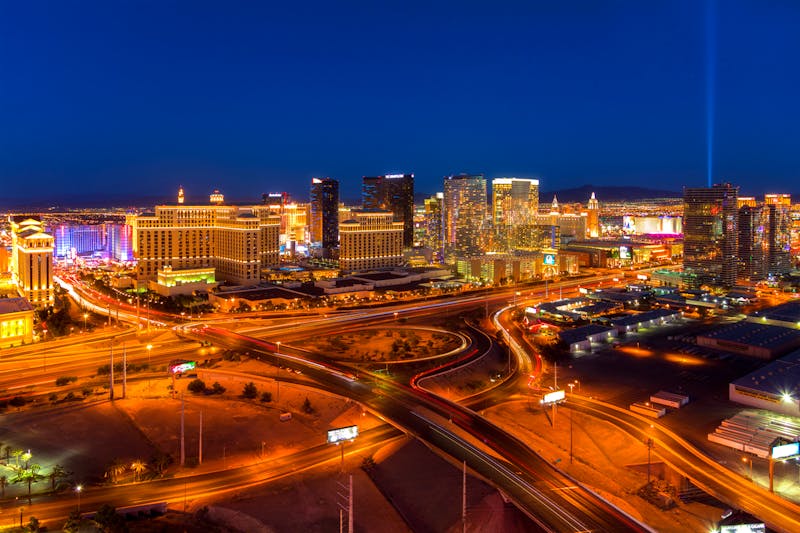
Some of the most dangerous roads and intersections in Las Vegas include Flamingo Road, Sahara Avenue, Charleston Boulevard, Tropicana Avenue, and major crossings along Las Vegas Boulevard, especially near the Strip. These areas consistently experience higher crash rates due to heavy traffic, tourism congestion, high speeds, and frequent pedestrian activity.
Battle Born Injury Lawyers have handled countless accident cases across Las Vegas and recovered over $100 million for injured clients. With 85+ years of combined experience—including time spent representing insurance companies—we’ve seen exactly where and why serious crashes happen. Patterns emerge quickly: certain roads, intersections, and traffic conditions repeatedly put drivers at risk.
In this guide, we break down the most dangerous areas in Las Vegas, explain the data behind the risks, and share what drivers can do to stay safer on the road.
1. Flamingo Road (Especially Near the Strip)
Flamingo Road cuts directly through the Strip, making it one of the most congested and unpredictable corridors in the city.
Hazards:
- Heavy tourist traffic
- Frequent lane changes and confusion
- High pedestrian crossings
2. Sahara Avenue
Sahara is a major east-west artery where speed and volume combine to increase crash severity.
Hazards:
- High-speed traffic
- Long stretches between controlled intersections
- Limited pedestrian infrastructure in some areas
3. Charleston Boulevard
Charleston Boulevard has been identified as one of the most traveled—and most collision-prone—roads in Las Vegas.
Hazards:
- Dense urban traffic
- Frequent stoplights and turning conflicts
- High crash volume historically
4. Tropicana Avenue & Las Vegas Boulevard Intersection
This intersection sits near major resorts and sees a constant mix of pedestrians, rideshare vehicles, and out-of-town drivers.
Hazards:
- Extremely high traffic volume
- Tourist congestion
- Complex traffic signal patterns
5. Las Vegas Boulevard (The Strip)
The Strip is one of the most dangerous areas due to the sheer volume of activity and unpredictability.
Hazards:
- Heavy pedestrian traffic
- Distracted driving
- Frequent stopping and merging
Other Dangerous Las Vegas Roads
Decatur Boulevard
Hazards:
- High-speed zones
- Frequent commercial traffic
- Busy intersections
Eastern Avenue & Silverado Ranch Boulevard
Hazards:
- Rapid suburban growth
- Increased commuter congestion
- Turning conflicts during peak hours
Rainbow Boulevard & Spring Valley Area
Hazards:
- Dense residential and retail traffic
- Frequent left-turn collisions
- High accident frequency
Why These Roads Are So Dangerous
According to the Nevada Department of Transportation (NDOT), urban arterial roads—like many listed above—carry the highest traffic loads and are more prone to crashes due to frequent intersections and turning movements.
The Nevada Office of Traffic Safety also reports that speeding, impairment, and distracted driving are leading contributors to serious crashes statewide.
Let’s look at the key risk factors behind high-crash areas:
- High Traffic Volume: More vehicles = more opportunities for collisions. Congested areas increase rear-end and side-impact crashes.
- Complex Intersections: Multiple lanes, signals, and turn options increase the risk of driver error. Tourists unfamiliar with roads make sudden decisions.
- Pedestrian Density: The Strip and surrounding roads have some of the highest pedestrian traffic in Nevada. Pedestrian-involved crashes are often more severe.
- Speed + Urban Design: Wide roads encourage higher speeds, and mixed-use areas combine fast traffic with local access points.
- Rapid Growth: Expanding neighborhoods increase congestion faster than infrastructure adapts.
Another reason why Las Vegas roads are especially dangerous is the required system-level safety improvement. Here’s what needs to change:
Engineering Solutions
- Better lighting at intersections
- Protected left-turn signals
- Improved pedestrian crossings
Enforcement Measures
- Increased patrols in high-risk zones
- Speed enforcement initiatives
Public Awareness
- Campaigns targeting distracted and impaired driving
How to Stay Safer on Las Vegas Roads
- Slow down in high-traffic corridors; reducing speed gives you more time to react and lowers the severity of a crash
- Watch for pedestrians, especially near the Strip, where they often cross outside designated areas or against signals
- Avoid sudden lane changes like frequent merging and last-second turns
- Signal early, check blind spots, and commit to your lane well in advance
- Stay alert at multi-lane intersections and double-check traffic flow before proceeding—even on a green light
- Never assume other drivers will yield
- Be extra cautious with rideshare and taxi traffic, especially near hotels and casinos.
- Nevada law prohibits handheld device use while driving, so limit your distractions when behind the wheel, as even hands-free distractions can reduce reaction time
- Adjust for nighttime and weekend risks
- Keep a safe following distance by giving yourself extra space to prevent rear-end collisions, one of the most frequent crash types
- Knowing where you’re going reduces last-second decisions that can lead to accidents Las Vegas roadwork is ongoing; watch for shifting lanes, reduced speed limits, and unexpected barriers
FAQs About Dangerous Roads and Car Accidents in Las Vegas
Do accident-prone locations affect how fault is determined?
Not directly. Just because a road is known for crashes doesn’t automatically make another driver at fault. Liability is still based on specific actions leading to the accident, not on the location's reputation.
Can prior crash history at an intersection be used in a claim?
In some cases, yes. A documented history of crashes may help support arguments related to:
- Visibility issues
- Signal timing problems
- Unsafe design
However, it typically requires additional evidence and often expert analysis to be relevant in a legal claim.
Are there shorter deadlines if a roadway condition contributed to the crash?
Yes. If a government entity may be involved (for example, due to unsafe road design or maintenance), there can be strict notice requirements and shorter timelines than standard injury claims.
Will traffic camera footage be available after a crash?
Sometimes—but not always. Traffic cameras in Las Vegas are often used for real-time monitoring, and footage may not be stored long-term. Acting quickly is critical if you want to preserve any available video evidence.
Can road construction impact liability in an accident?
Yes. Construction zones can shift liability depending on:
- Signage and warnings provided
- Lane closures or detours
- Contractor compliance with safety standards
Multiple parties—including contractors or government entities—may be involved.
Does Nevada law treat pedestrian-involved crashes differently?
Nevada law requires drivers to exercise due care to avoid pedestrians, even outside marked crosswalks. This can play a major role in how fault is evaluated.
How long do I have to file a claim after a Las Vegas car accident?
Most personal injury claims in Nevada must be filed within two years from the date of the accident. Missing this deadline can permanently bar your claim.
Will my case be affected if the accident happened in a tourist-heavy area?
It can. Cases in high-traffic or tourist zones often involve:
- Out-of-state drivers
- Rental vehicles
- Multiple insurance policies
This can make claims more complex and require additional investigation.
What if multiple drivers were involved in the crash?
Nevada follows a comparative negligence system, meaning fault can be divided among multiple parties. Each party’s percentage of fault affects how damages are allocated.
Do I need a lawyer if the accident seems minor?
Even minor accidents can lead to:
- Delayed injuries
- Disputed fault
- Low settlement offers
Speaking with a lawyer early helps you understand your rights before making decisions that could impact your claim.
Battle Born Has Your Back
Dangerous roads are a harsh reality of driving in Las Vegas. And when a crash happens in one of these high-risk areas, the details that matter most can get lost if you don’t act quickly.
Battle Born Injury Lawyers know how these cases unfold on Las Vegas roads because we’ve built them from the ground up—investigating crash scenes, preserving critical evidence, and holding the right parties accountable. Our attorneys have served as court-appointed arbitrators and mediators and are regularly recognized for their litigation experience and client advocacy across Nevada.
Talk to a team that understands Las Vegas, understands these roads, and knows how to fight for results. Schedule your free case evaluation today.