

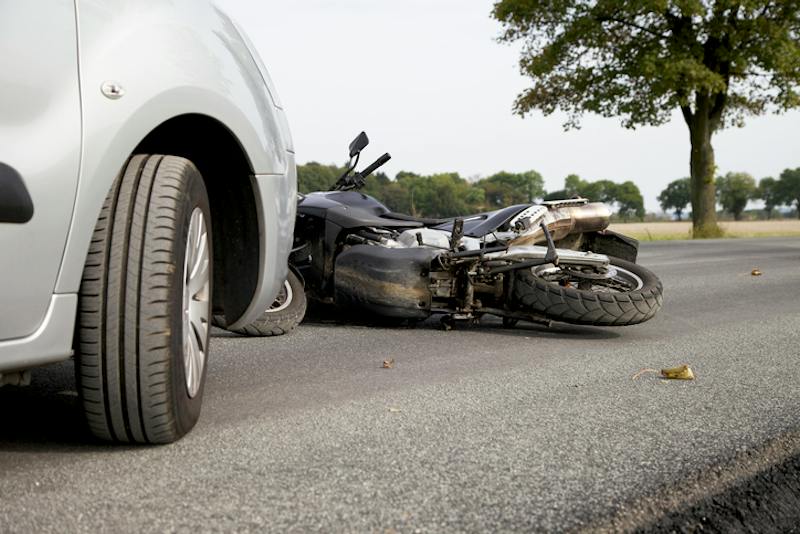
"I never saw the motorcycle" is one of the most common statements drivers give after striking a rider. Insurance companies know that line carries weight with claims adjusters and juries alike.
Nevada's comparative negligence law under NRS 41.141 reduces or bars a rider's recovery based on their own percentage of fault. That means any suggestion that a rider was hard to see, or somehow responsible for not being seen, can directly affect the payout. Several of Battle Born Injury Lawyers' attorneys built their early careers on the defense side of the insurance industry, which gives the firm direct insight into how adjusters build a rider-bias argument and how to take it apart.
This article explains what rider bias is, why drivers so often claim they never saw the motorcycle, and how to protect a Nevada injury claim from this tactic.
What Is Motorcycle Rider Bias?
Motorcycle rider bias refers to the tendency of drivers, witnesses, and even insurance adjusters to unfairly blame motorcyclists simply for being on a motorcycle, rather than considering the rider's actions during an incident. This bias often manifests as an assumption that motorcyclists are:
- Inherently reckless
- Difficult to see
- Partially responsible whenever an accident occurs
In the context of Nevada's comparative negligence rule, this assumption has significant consequences. Any percentage of fault assigned to the rider diminishes their potential recovery. If a motorcyclist is found to be more at fault than the driver, they will not receive any compensation.
Why Do Drivers Say They Never Saw the Motorcycle?
Drivers frequently misjudge a motorcycle's speed and distance because its smaller visual profile provides fewer cues than a car's. A 2011 NHTSA study on motorcycle conspicuity found that drivers turning left across oncoming traffic left a motorcyclist a safety margin under 3.44 seconds in more than a third of trials under standard low-beam lighting.
That same study found several participants recalled seeing only two or three motorcycles, even though a research rider passed at least six times during the test. Researchers describe this as a form of inattentional blindness, where a driver's brain filters out an object it does not expect to see, even when that object sits directly in the driver's field of view.
How Insurance Adjusters Use Rider Bias to Reduce Claims
- Framing the rider as the cause of the crash because they were "hard to see," even when the driver had a clear duty to check for oncoming traffic.
- Pointing to the rider's speed, lane position, or experience level to suggest comparative fault without evidence connecting those factors to the crash.
- Offering a quick, low settlement before the rider has secured a full medical picture, counting on the "never saw them" narrative to discourage a fight.
- Using recorded statements taken shortly after the crash, while a rider is still in shock or on pain medication, to extract comments that can later be framed as an admission of fault.
Can Your Gear, Bike or Appearance Be Used Against You?
Insurers sometimes try to use a rider's gear, bike style, or appearance to suggest recklessness. None of these factors establish fault on their own under Nevada law.
Nevada requires riders and passengers to wear protective headgear under NRS 486.231, and a documented helmet violation can become relevant to a claim. None of the following are evidence of fault on their own, and should never be treated as such in a fair evaluation:
- Riding a sport bike instead of a cruiser
- Wearing leather instead of high-visibility gear
- Having tattoos or a particular riding style
Lane splitting is not permitted under Nevada traffic law, so an adjuster alleging lane splitting is raising a real legal issue. The burden still rests on the insurer to prove that conduct caused the crash, not simply that it occurred.
How to Fight Back Against Rider Bias in Your Claim
Countering rider bias starts with building an evidence record that does not depend on anyone's assumptions about motorcyclists:
- Request the responding officer's full crash report and any body- or dash-camera footage.
- Identify and contact independent witnesses before memories fade.
- Preserve the motorcycle, helmet, and gear exactly as they were after the crash.
- Pull any available event data recorder information from the vehicles involved.
- Avoid giving a recorded statement to the other driver's insurer before speaking with an attorney.
Our attorneys have handled claims from the insurance side of the table. That background means the firm knows what an adjuster's file looks like internally and where a rider-bias argument tends to fall apart once real evidence is introduced.
Battle Born Injury Lawyers has recovered more than $100 million for Nevada clients and built its reputation on direct attorney involvement in every case. The firm holds an AV Preeminent rating, the Nevada Justice Association's Consumer Advocate of the Year recognition, Super Lawyers distinction, and more than 400 five-star reviews from clients across Las Vegas, Henderson, and Reno.
Riders facing a rider-bias argument from an insurance company can reach Battle Born Injury Lawyers 24/7 for a free case evaluation. Contact us today.
Frequently Asked Questions
Can an insurance company deny my claim just because I was riding a motorcycle? No. An insurer must base a denial or fault allocation on evidence related to the crash, not on assumptions about motorcyclists in general.
Does wearing a helmet affect my claim in Nevada? Nevada requires helmets under NRS 486.231. Not wearing one can become a factor insurers raise, particularly regarding head injury damages, but it does not automatically bar a claim for injuries unrelated to head trauma.
What evidence helps counter rider bias in a claim? Police reports, independent witness statements, scene photographs, event data recorder information, and prompt medical documentation all help establish what actually happened, rather than what an adjuster assumes happened.
Disclaimer: This content is for informational purposes only and does not constitute legal advice. Every case is different and should be evaluated individually, as the law in this area is extremely nuanced. Past results do not guarantee future outcomes.
